
Buffalo King Megaways is a volatile slot: its changing reel layout and feature-driven payouts can produce long quiet stretches as well as occasional large wins. That makes bet sizing more than a matter of choosing a coin value. A sensible stake should fit your entertainment budget, the game’s variance, and the amount of time you want to play. No staking system can change the slot’s random outcomes or guarantee a profit, but a measured approach can help you manage risk.
Canadian players can use this review as a practical guide to setting a stake before spinning. For current game access and details, see https://buffalo-king-megaways.ca. Availability, payment options, and casino terms may vary by province and operator, so check the rules that apply where you live.
How Buffalo King Megaways shapes your budget
Megaways games can display a different number of symbols on each reel from one spin to the next, creating a variable number of ways to form wins. In Buffalo King Megaways, the changing reel setup and bonus features make results difficult to predict from one spin to another. A larger number of possible ways does not mean a win is due, and previous spins do not make a future result more likely.
The practical implication is that your balance may move unevenly. A session can include many spins with small or no returns, followed by a feature or a more substantial hit. If your stake is too high relative to your bankroll, a short losing run may end the session before you have played for as long as planned. Bet sizing should therefore begin with a limit—not a prediction about when the slot will pay.
Build a stake around a fixed session budget
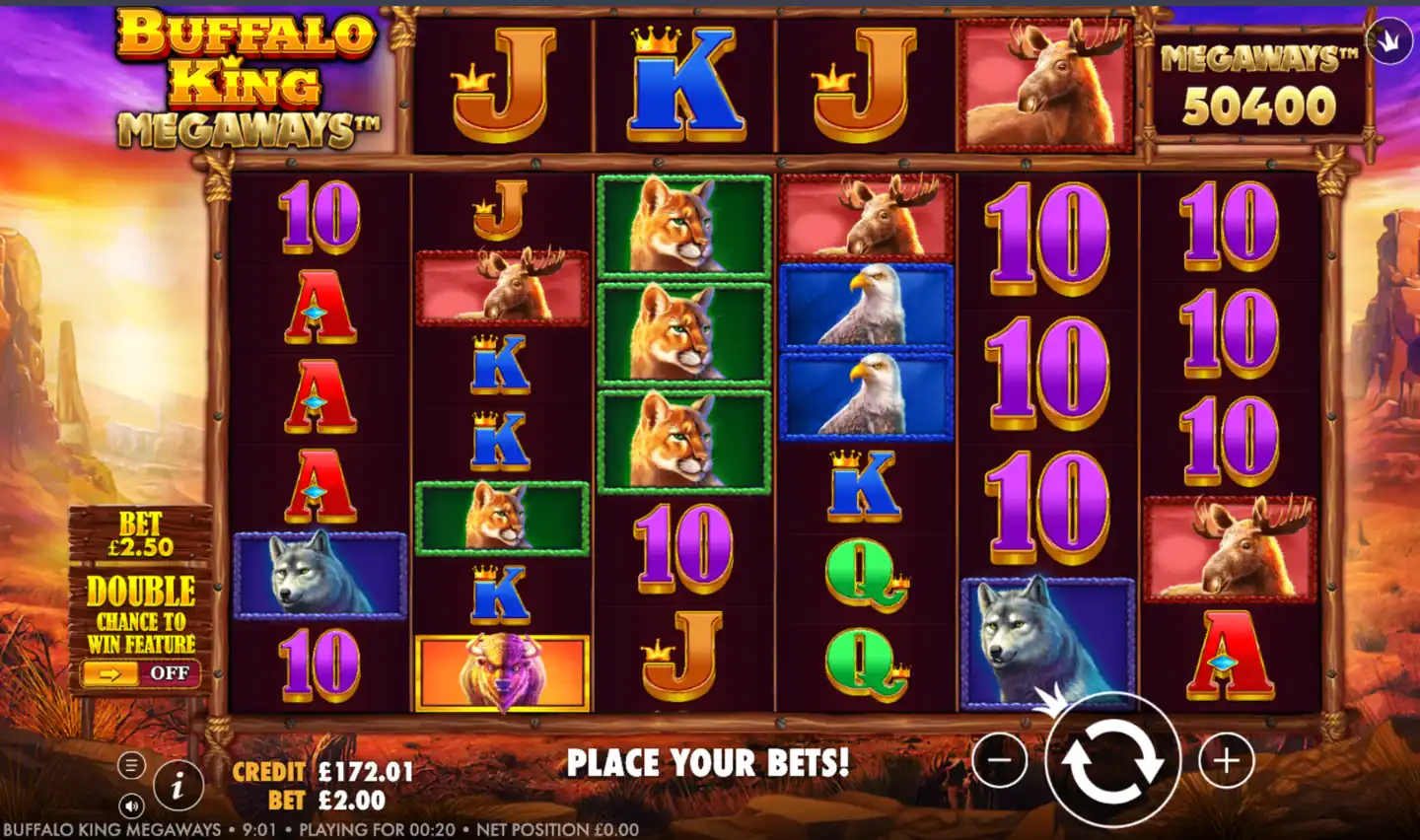
First decide how much money you can afford to spend on entertainment. This should be separate from rent, bills, debt payments, savings, and other essential expenses. Treat the amount as the full cost of the session, not as a target you must win back. Once the limit is reached, stop.
Next, choose how many spins you would like the budget to cover. Divide the session budget by that number to get a rough starting stake. For example, a $60 entertainment budget intended to cover about 120 spins suggests an average stake of $0.50 per spin. This is only a planning tool: it cannot guarantee that the balance will last for 120 spins, because wins and losses vary.
Many players find it easier to think in units. If your total session budget is 100 units, a stake of one unit per spin is more conservative than staking five units. The exact unit value should reflect your personal finances. A small, repeatable stake tends to provide more opportunities to play within a fixed budget, while a large stake can make the balance change quickly.
Practical bet-sizing rules
- Set a maximum stake before opening the game. Choose an amount you are comfortable losing on every spin, not an amount based on a hoped-for payout.
- Keep the stake steady during ordinary play. Increasing bets after losses can turn a manageable session into an attempt to recover money. Decreasing the stake to extend play is generally more budget-conscious than raising it under pressure.
- Use a stop-loss and a time limit. A spending cap protects your finances; a time cap helps keep gambling from taking over other activities.
- Do not treat a win as house money. If you reach a personal cash-out point, consider ending the session rather than increasing your stake because the balance is temporarily higher.
- Keep bonus conditions separate from your bet plan. If you accept a promotion, read its wagering, expiry, and eligible-game rules before playing. A bonus balance may have restrictions that affect withdrawals.
Why “betting systems” do not beat the slot
Progression systems often advise players to raise their stake after a loss or after a win. These methods can change the size and speed of bankroll swings, but they do not alter the game’s underlying probabilities. A sequence of losses does not make a win “due,” and increasing the stake cannot force a bonus round to appear.
For a high-variance slot, aggressive progressions can be especially risky because a run of losing spins may require increasingly large bets. If your bankroll or the casino’s maximum bet is reached, the system stops working as planned. A fixed stake—or a preplanned reduction in stake when your balance falls—is easier to control. Avoid borrowing money or extending a session to continue a staking pattern.
Choosing a comfortable stake in practice
Before depositing, check the game’s minimum and maximum bet and make sure the minimum is compatible with your budget. If the minimum stake would consume too much of your intended session bankroll, the game may not suit that budget. Do not deposit more simply to make a preferred stake feel affordable.
If you are unsure how quickly the balance may change, try the demo version where it is available. A demo can help you learn the controls, understand the pace of play, and see how variable outcomes feel without risking money. Demo results are not a forecast of real-money results, and they cannot tell you when a feature will occur. Use the practice mode to become familiar with the game, not to infer a winning pattern.
When playing for real money, take a break after a set number of spins or at a chosen time. Reassess whether you are still comfortable with the original limit. If you feel frustrated, rushed, or tempted to chase losses, stop rather than trying to solve the feeling with a larger bet.
Canada-specific checks before you play
Online gambling is regulated differently across Canada. Before registering, confirm that the operator is permitted to serve players in your province or territory and that you meet the applicable legal age requirement. Read the casino’s terms, privacy policy, withdrawal rules, and responsible-gambling tools. A casino’s licence and oversight can depend on its jurisdiction and the market it serves; do not assume that every site follows the same rules.
Check payment methods and withdrawal conditions before depositing. Processing times, fees, identity verification, and transaction limits can vary. Use payment options in your own name, secure your account with a strong password, and avoid playing on shared devices. If a site’s licensing or terms are unclear, choose not to deposit until you can verify them through reliable official sources.
Quick stake-planning example
Suppose a player sets aside $40 for one session and would like to play at a modest pace. They could divide that budget into 80 units of $0.50 each, then decide that the planned stake will be one unit per spin. The player should still accept that the money might be lost well before 80 spins, or that a win may extend the session. The calculation is a way to organize spending, not a prediction of the game’s return.
If the game’s minimum bet is higher than the player’s intended unit, the sensible response is to find a lower-stake option or skip the session—not to exceed the budget. Likewise, if a win raises the balance, the player can keep the original stake or stop. There is no need to increase the wager just because the balance temporarily allows it.
Responsible play is part of the strategy
Set limits while calm, before gambling. Use deposit, loss, session, or time controls offered by the casino, and consider a cooling-off break if you find it hard to stop. Never gamble to pay bills, solve financial problems, or recover previous losses. If gambling is causing stress or affecting relationships, take a break and seek support from a trusted person or a local gambling-help service.
The best bet-sizing strategy for Buffalo King Megaways is not a secret formula: it is a stake that remains small enough to fit a fixed entertainment budget, paired with clear stop rules. The game’s Megaways format can make each spin look different, but it does not make outcomes predictable. Plan for volatility, keep the wager steady, and be willing to walk away.